


Krishnappa R., N. Uttam Singh, Nivetina Laitonjam, Lana Fica Bareh
ICAR-RC for NEH Region, Umiam, Meghalaya
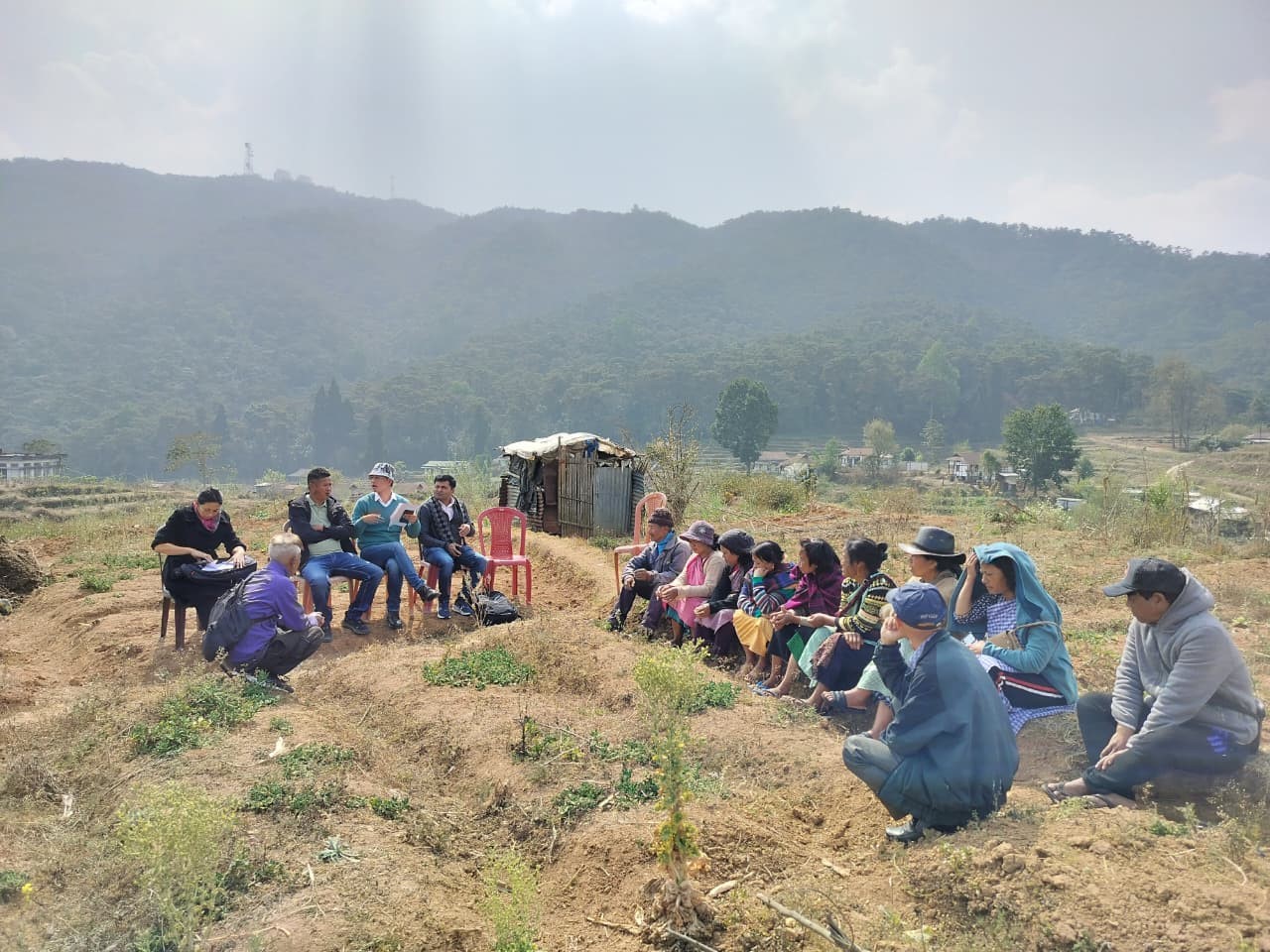
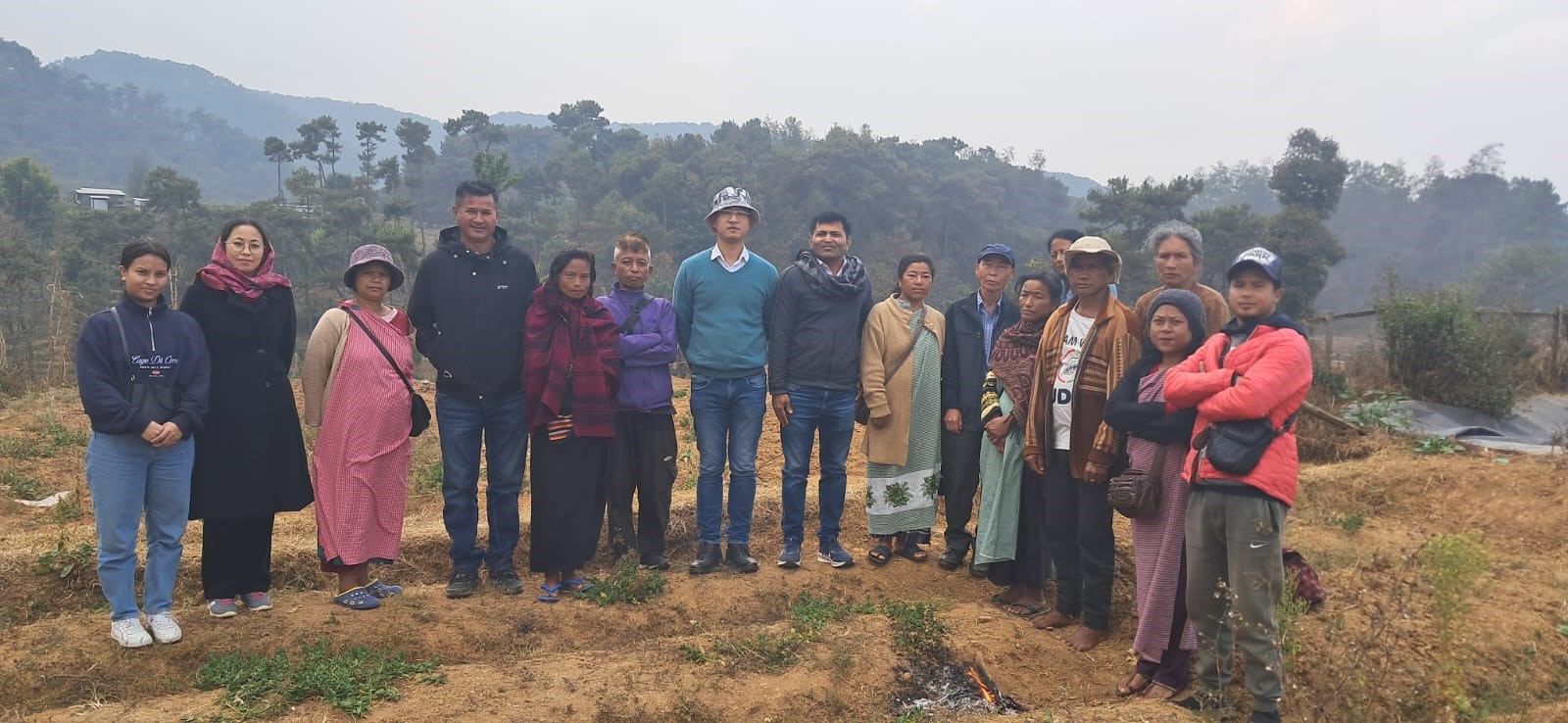
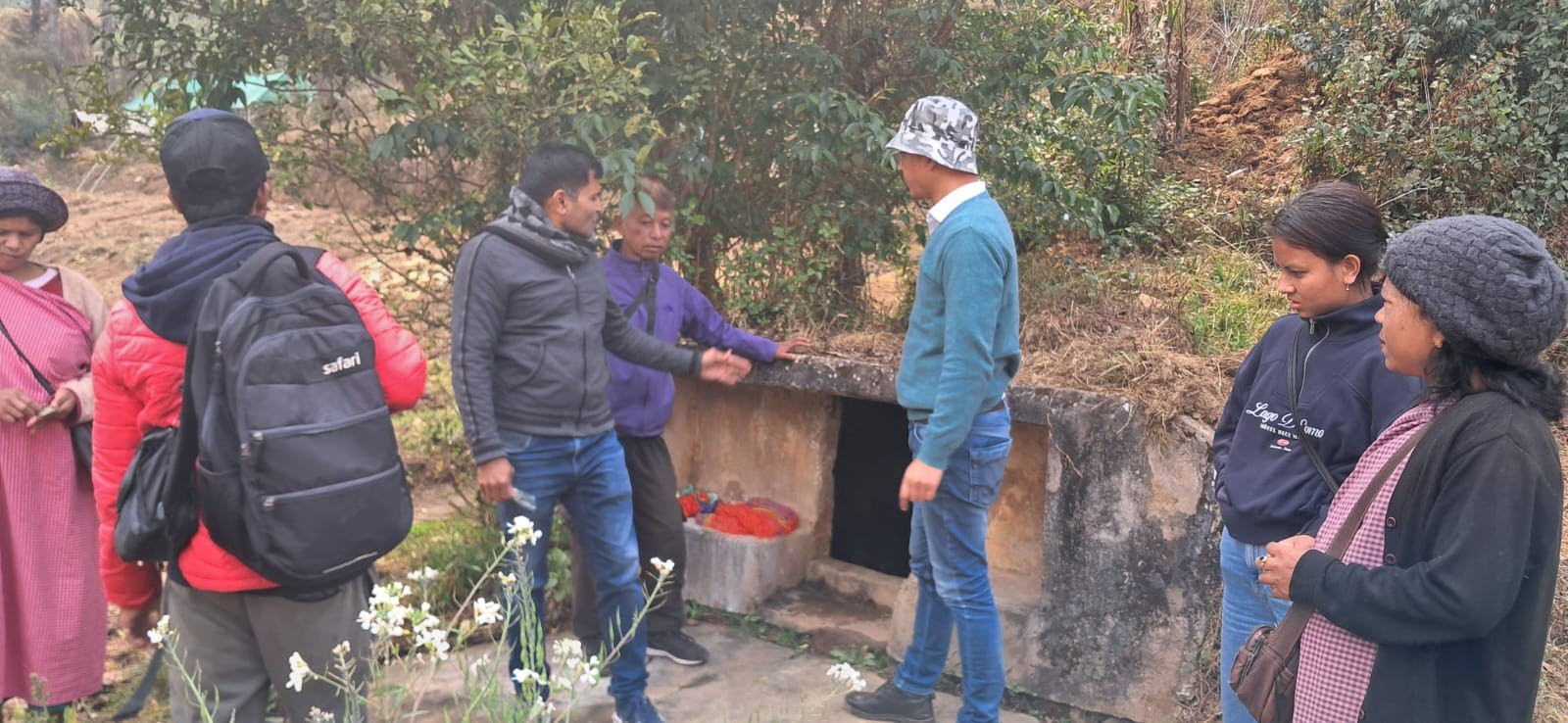
Under ongoing NICRA project, one preliminary diagnostic field visit was carried out on 25 February 2026 by concerned climate change research scientists and project fellows to one of differentially vulnerable village to climate change viz., Lawsohtun village under Mylliem Block of East Khasi Hills district, Meghalaya. The Principal Investigator (PI) of the project, Dr. Krishnappa R. and senior subject expert cum Co-PI of project, Dr. N. Uttam Singh has actively participated and interacted along with active involvement of project staff viz., Dr. Nivetina Laitonjam and Ms. Lana Fica Bareh. The purpose of the visit was to assess the village location, observe the condition of farmlands, and interact with groups of tribal farmers to gather baseline information on the village profile, indigenous agricultural practices, infrastructure facilities, and climate change–related challenges.
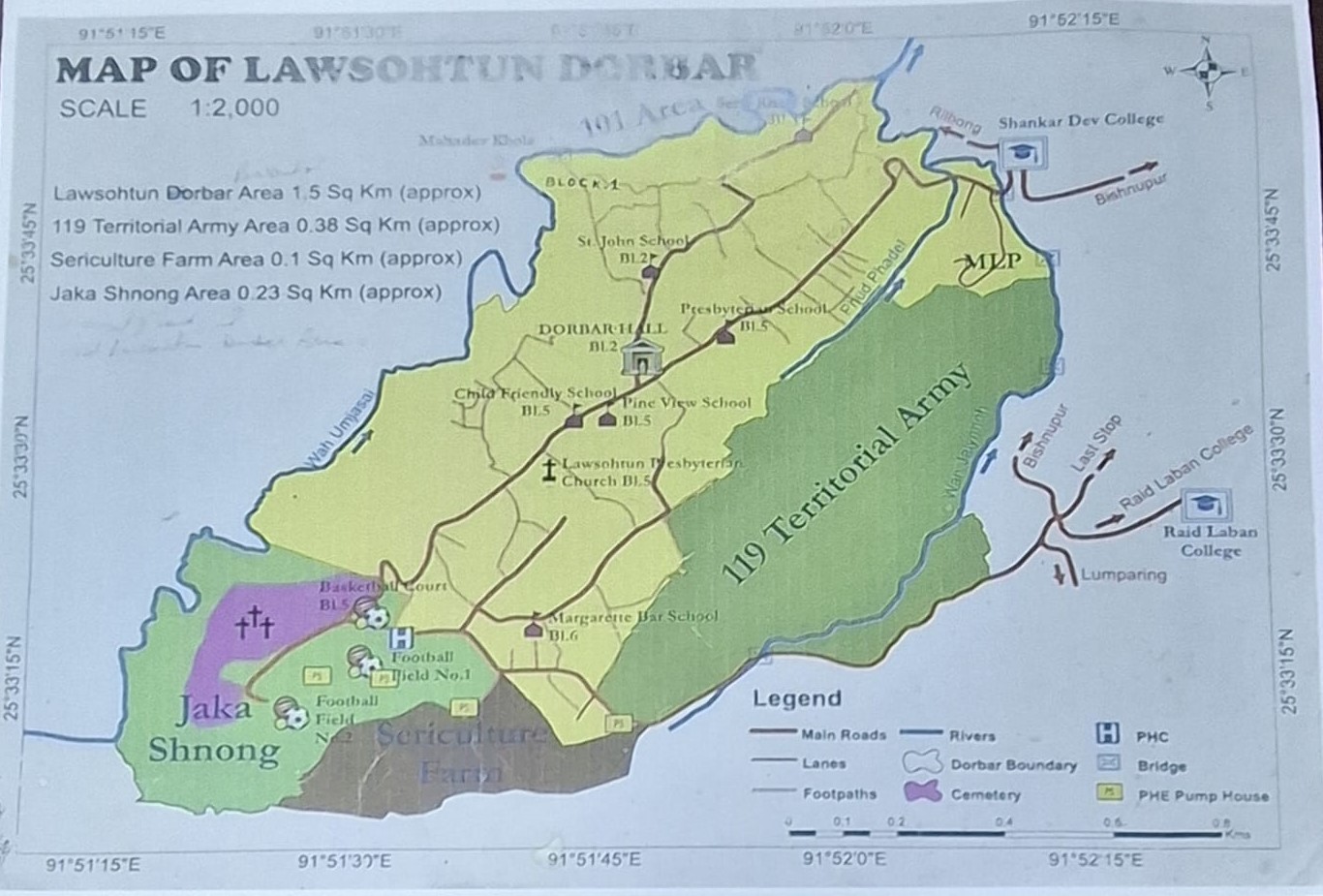
Distinctly climate change vulnerable Lawsohtun village has a total population of approximately 10,100 people distributed across 2,298 households, with a sex ratio of 1083.76 females per 1000 males. Despite its semi-urban village setting, a considerable proportion of households (58.75 percent) fall below the poverty line, reflecting the presence of economic vulnerability in the village. The village covers a total geographical area of about 221 hectares, out of which around 10.0 hectares are occupied by a sericulture farm managed by the State Government of Meghalaya. In addition, the village has around 23.0 hectares of unique community agricultural land, where approximately 40 farmers are actively engaged in cultivation. Overall, 84 farmers are engaged in agriculture and allied activities, accounting for only 1.83 percent of the total households demonstrating semi-urban nature of the village, where many families depend primarily on non-farm occupations for their livelihoods. Nevertheless, the households that continue to practice agriculture contribute to local food production and therefore need to be encouraged through appropriate technological interventions and institutional support to sustain and strengthen farming activities in the village.
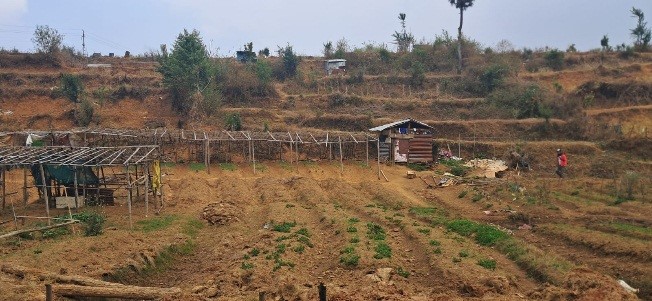
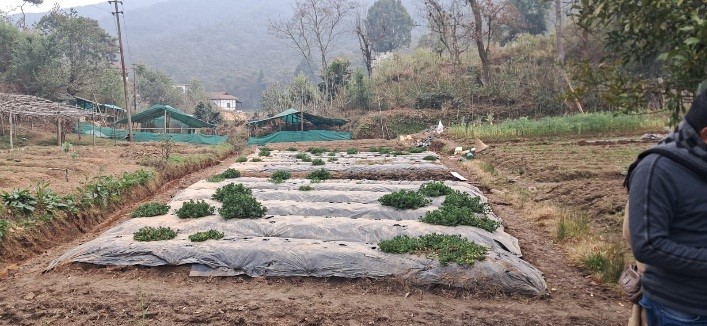
Agricultural land in the village is mostly located in upland areas, and cultivation is dominated by vegetable crops. The major crops grown include carrot, beetroot, cabbage, cauliflower, mustard, pea, beans, pumpkin, coriander and biogreens like parsley and khale. About half of the farmers practice organic cultivation, and the village is uniquely known for the production of organic vegetables, most of which are sold in the local market. However, off-season cropping is not practiced due to irrigation constraints and unfavourable dry conditions during the winter months. Livestock and allied activities such as piggery, poultry, fishery and cattle rearing are also present on a limited scale and serve as supplementary sources of income for farming households.
Irrigation facilities in the village are very limited, and the primary source of irrigation is a water tank of about 15 feet depth. Farmers reported that severe water scarcity during the winter season creates extreme dry conditions, which severely restrict crop cultivation and also they expressed concern about poor soil fertility. Higher cost of farm manure and non availability of other soil amendments make the edaphic constraints more visible. The village also has one community forest that contributes to environmental stability and supports local ecological resources.
In terms of infrastructure and basic amenities, the village is moderately well developed. There are five primary schools and two secondary schools serving the educational needs of the community, along with one post office and five Anganwadi centres. The village has access to drinking water and electricity, and no major problems were reported regarding these basic services. There are two churches and one local market that supports the sale of agricultural produce and daily household needs. However, important institutional and service facilities such as a bank and police station are not available within the village. Agricultural infrastructure is also limited, as there is no Custom Hiring Centre and farm mechanization is almost absent. Farmers depend mainly on traditional tools such as spades for cultivation, which increases farm drudgery with reduced efficiency and increases labour requirements.
More than 50 Self Help Groups exist in the village, but most of them are currently non-functional, indicating the need for strengthening community institutions and improving collective action among villagers. Strengthening these groups could play an important role in supporting agricultural and livelihood activities.
The village is exposed to various climatic stresses and natural hazards. Farmers reported that over the past ten years rainfall has declined remarkably, summer temperatures have increased, and winter cold conditions have become more intense. The village experiences frequent excessive rainfall and occasional hailstorms, while landslides occur approximately once in five years and cyclones once in about ten years. These climatic factors contribute to agricultural uncertainty and increase the vulnerability of farming households.
Overall, the preliminary village transactional visit revealed that Lawsohtun village has good potential for organic vegetable production despite the limited area under cultivation and the small proportion of households engaged in agriculture. Being a semi-urban village, agriculture is gradually declining, yet it remains an important livelihood activity for a section of the population. Encouraging these farmers through climate resilient technological interventions such as improved irrigation systems, protective cultivation practices, soil health improvement practices, hands on training on mushroom and vermicomposting, piggery and other efficient climate-resilient farm practices, and access to farm machinery will be certainly benefit to sustain current agricultural activities in village. With proper support and planning, the village has the potential to develop into a climate-resilient organic vegetable production system while strengthening the livelihoods of the farming community.
 |
|
 |
 |
 |
 |
 |
|